
Month by month
Moremi in January
January stacks Moremi's two water clocks at opposite ends of their swing: 21 days of rain overhead while the Delta's channels sit near their annual low, because the water that will fill them is still falling on Angola, 1,200 kilometres upstream.
If you only want the answer
January is for birders, tight budgets and drivers who genuinely enjoy mud. Bank on 161 mm of rain, dense bush, game scattered across the rain-filled interior, and the one booking luxury Moremi ever offers: campsites available a few weeks out.
Two clocks, both at extremes
The thirty-year averages put January at the top of the local rain calendar: 161 mm across 21 rain days, days of 30.5°C and nights of 20.7°C that never really cool off. Meanwhile the other clock, the Okavango flood, is at its quietest here; the pulse that peaks at Moremi around July and August is only now being assembled as storms over the Angolan highlands.
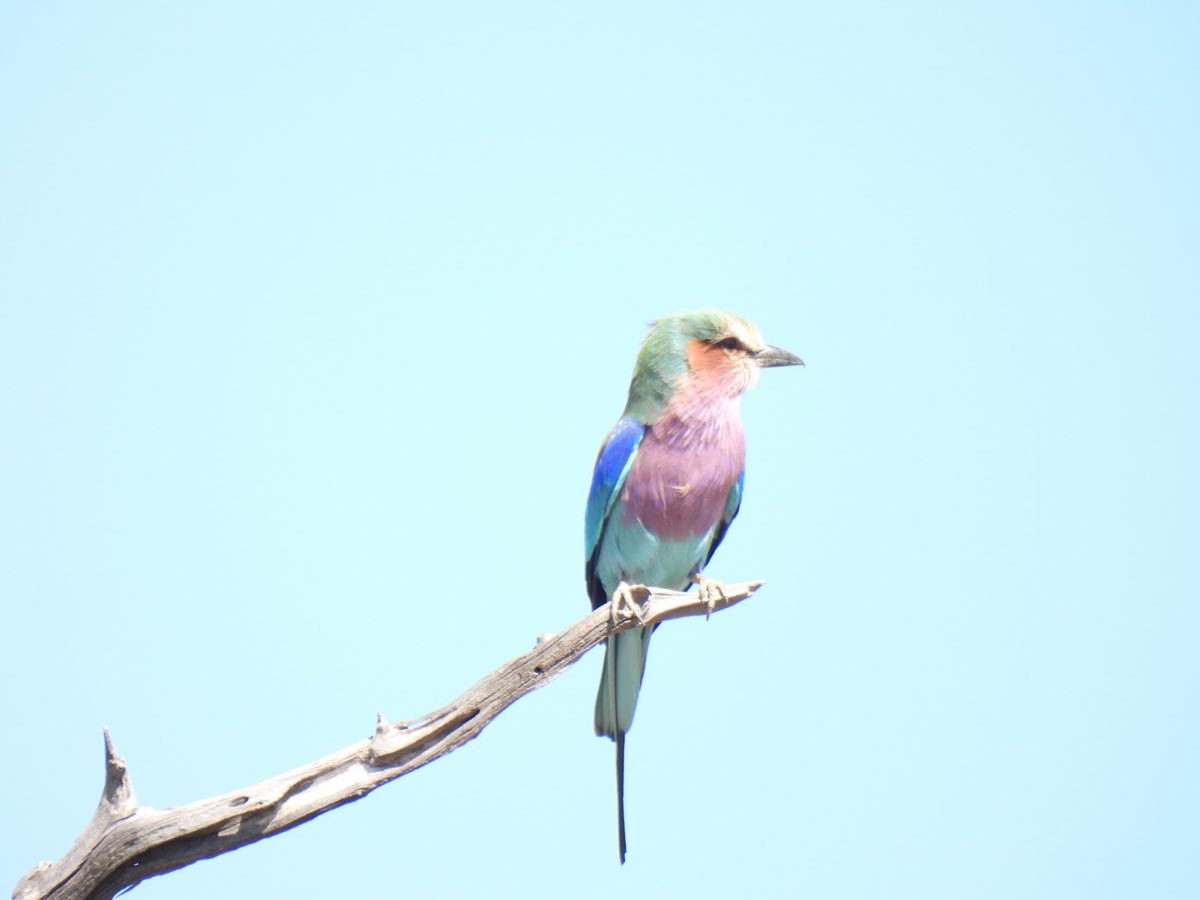
For game viewing the arithmetic is unhelpful. Rain fills every pan in the mopane interior, so nothing needs the permanent water, and the bush is at its thickest. What January gives you instead is the Delta's bird year at full volume: migrants in, residents in breeding plumage, and more than 400 species on the reserve list to work through. Note that the national fishing closed season covers January and February, so leave the rods in Maun.
What the tracks are doing
This is the month the self-drive default gets tested. Sand you would cruise in July turns to churned soup at the floodplain margins, water crossings deepen without warning, and DWNP will occasionally shut the reserve for a week or two after a heavy system moves through. Two vehicles travelling together is the sane format, with full recovery kit in each.
Gate hours run 05:30 to 19:00 through the summer months, which sounds generous until an afternoon storm costs you two hours of winching. Plan short legs and treat every distance estimate on our getting-there page as a dry-season number.
Booking, boats and one tip
A confirmed campsite reservation is still mandatory to enter, but in January you can usually secure one a few weeks ahead rather than the better part of a year, and lodge rates sit at their annual floor. Motorboats keep running on the permanent lagoons at Xakanaxa; mokoro from Mboma is a maybe at best, dependent on how much local rainwater is sitting on the floodplain.
The tip: sort your malaria prophylaxis properly before this trip. Northern Botswana's risk peaks during and just after the rains, and January is the exact centre of that window.